
Identificatie
Soort entiteit
Geauthoriseerde naam
Parallelle vormen van de naam
Gestandaardiseerde naamvorm(en) volgens andere regels.
Aandere naamsvormen
Identificatiecode voor organisaties
Beschrijving
Bestaansperiode
Geschiedenis
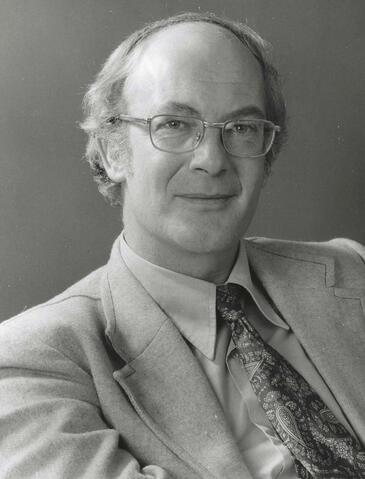
Beresford Hutchinson (1936–2006) was a distinguished horologist whose career spanned practical restoration, museum curation, scholarship, and generous mentorship within the horological community. Born in Hastings, Sussex, on 19 December 1936, his fascination with clocks began in childhood. His father repaired clocks as a hobby, and by the age of six Beresford had already taken apart and reassembled his first clock. As a teenager he developed his skills further by assisting local watchmakers and antique dealers.
He attended Hastings Grammar School before going on to Queen Mary College, London, to study botany. His studies were interrupted by National Service in the RAF, with postings including Omaha, Nebraska. After demobilisation he returned to horology, working from 1961 to 1964 with the respected restorer Percy Dawson in London, while studying at Hackney Technical College and gaining his Fellowship of the British Horological Institute.
In 1964 he joined the British Museum as an assistant in the horological collections, becoming research assistant in charge of the department following the death of Philip Coole. His contributions included advising on major exhibitions, notably the innovative permanent gallery opened in 1976, and important acquisitions such as the Buschman clock with remontoir, and the Godman regulator. He was known for his encyclopaedic knowledge of the collection and for his patient, supportive encouragement of students and visiting researchers.
In 1979 he moved to the National Maritime Museum, Greenwich, where he served for a decade as Curator of Horology. There he oversaw significant acquisitions, including the major Foulkes bequest, and contributed to publications on chronometers and scientific instruments. His personal passion extended across the history and technology of timekeeping, from turret clocks to radio-controlled watches and mass-produced nineteenth-century examples.
Alongside his curatorial responsibilities, he played an active role in the horological community. He served the Antiquarian Horological Society as a Council member, supported the British Horological Institute and the Clockmakers’ Company, taught evening classes, lectured widely, and advised dioceses, collectors, and museums. He published Orologi Antichi, a book on antique clocks in Italian, in 1982 and contributed papers, lectures and consultations throughout his career.
After retiring in 1990, he returned to hands-on conservation and became a familiar figure at the Brunel Clock Fair, selling items from his own collection and offering advice with characteristic humour. He continued to write, consult, and restore clocks almost to the end of his life.
Known variously as Hutch, Berry, and Beresford, depending on the period of his career, he was admired not only as a leading authority across the breadth of horology, but as a kind, modest and witty colleague. His sudden death from a heart attack at home in Charlton on 10 April 2006, shortly before his seventieth birthday, was widely felt as a great loss to the world of horological scholarship and friendship.
Plaatsen
Rechtsvorm
Functies, beroepen en activiteiten
Mandaat/bronnen van bevoegdheid
Interne structuren / genealogie
Algemene context
relaties
Access points area
Onderwerp trefwoord
Geografische trefwoorden
Occupations
Beheer
Authority record identifier
Identificatiecode van de instelling
Toegepaste regels en/of conventies
Status
Niveau van detaillering
Datering van aanmaak, herziening of verwijdering
Taal (talen)
Schrift(en)
Bronnen
Beresford Hutchinson's biography by James Nye.